










A coach’s goal is the final
Thursday, July 9, 2020
|
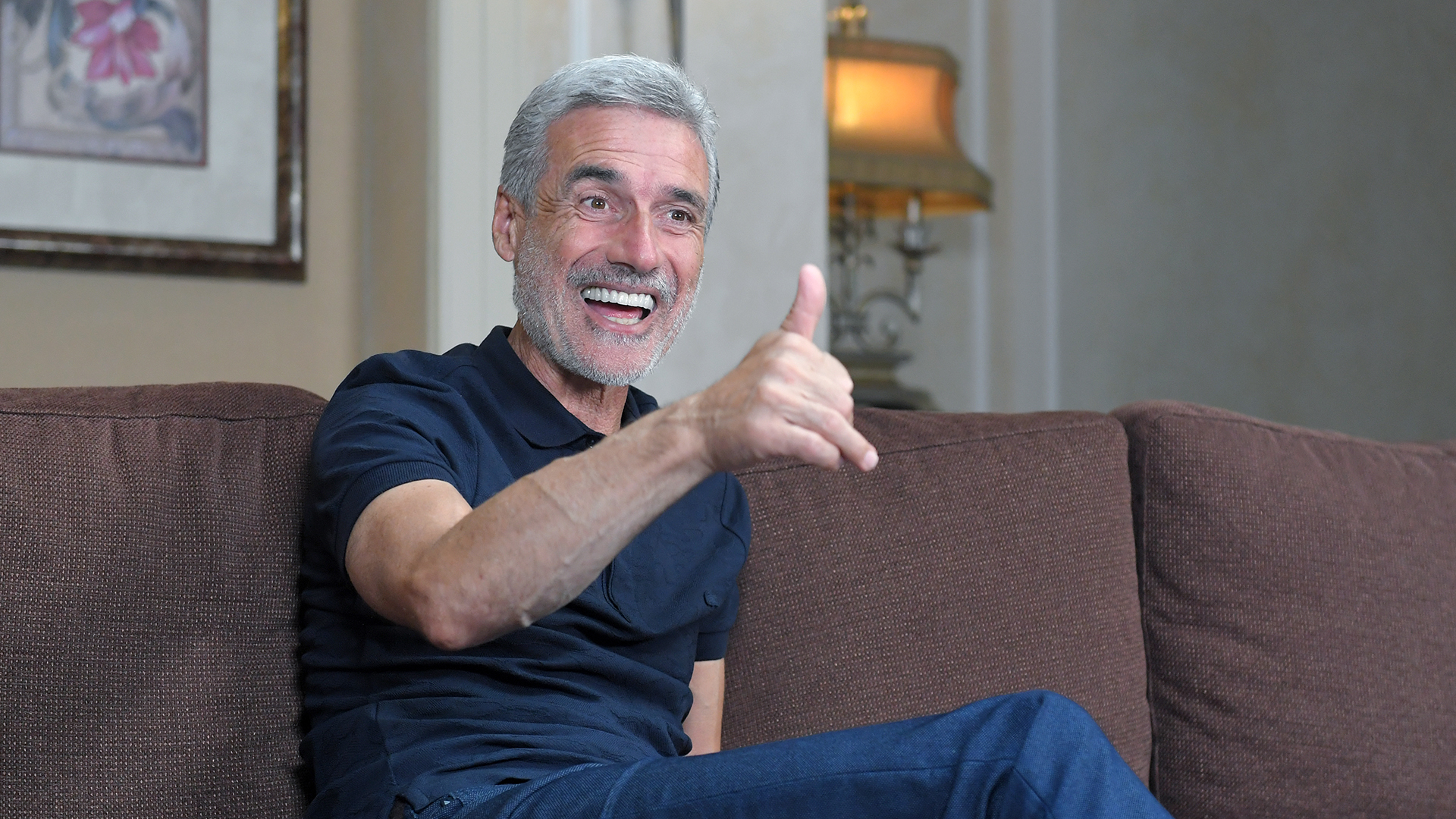
Shakhtar manager Luis Castro gave an extensive interview to UEFA
The materials will be used in the UEFA Europa League Magazine and on the organisation’s other platforms. We bring you the most interesting parts of the conversation.
- Luis, first let’s talk about what happened before the pandemic. Basically, talking about the pandemic from a coach’s perspective and the way you dealt with it. For a coach, it’s frustrating that all this ended the way it did – that’s evident. How was it for you, adapting the technical side [of football] to this unprecedented situation?
- It’s impossible to adapt successfully, because the world is perfect: schedules are met, planning is done, games are at a certain time and must start strictly at that time, stadiums are full, there’s all that atmosphere, and what we have now is that plans are constantly changing, stadiums are soulless; they have no spectators. So it’s a world that is completely different to what we are used to. So, this habit isn’t going to settle. However much we try to get our players to adapt to empty stadiums, to masks, to social distancing, to new forms of communication for all that is happening, we at least have the comfort of knowing that all this is temporary. And we also have to realise that other than us – we are affected but privileged – there are many people in the world suffering from this pandemic; there are people much more affected than us and there are many areas of society suffering terribly. We have to continue our activity – though with the constraints that I’ve talked about – but, clearly, we are not used to it and we’re not going to get used to it, but we’re looking forward to everything going back to normal.
- How difficult was it to monitor players during this period? How was it for you and your technical staff?
- I’ve often heard in statements made to the media that players are training at home. For me, football training, as it is, can never be done at home or individually. It will always be a collective game with collective dynamics. However much it is said that teams trained during this pandemic, no; we didn’t do any training to do with football. We tried to train and keep the players active, but we never fully achieved it nor will we ever achieve it with the group separated. What did we do? We did what all coaches and technical teams in the world did. We monitored players daily: their sleep, their food, their cardiac progression, daily wear and tear in terms of their energy. We tried to have the players minimally ready so that when they returned to training, they had the ability to respond positively. That’s what we tried to do, but we clearly knew that there was a dimension, in addition to the technical, tactical and physical part, that had been affected. There was one dimension that had been affected and injured to a great extent, and that’s the psychological dimension, because we all have friends and relatives; we all saw the world suffering. So we were all permanently concerned about how to escape and resist this situation. That dimension was affected, and when we returned to this abnormal normality, which was training separately, we noticed more than once that there was a need for social contact, for talking about things, for players to touch and be in a group. So we tried, in a way that we are not used to, to recover everything that was lost. And that’s what happened: a return to normality in a way we weren’t used to. But we overcame the situation by monitoring and presenting work proposals at home that have nothing to do with football training.
- Let’s talk about the first leg [of the UEFA Europa League Round of 16] match against Wolfsburg. The match was, and Luís Castro, you and I both know this, on the eve of the State of Emergency being declared in Portugal, wasn’t it? How did you prepare for a match during a time where some things were prohibited while others still weren’t? You weren’t sure if the match would be played behind closed doors. Was the match going to be postponed? How did Luís Castro and Shakhtar handle the whole situation?
- Let’s separate the result from the match itself, the fact that we managed to get the victory away from home – let’s put that to one side. At first, there was a lot of worry. The pandemic had reached its peak in Germany; the situation in the Ukraine was also pretty bad. The Ukrainian Association of Football was deciding whether or not to postpone the league season; we didn’t know whether the decision would be made before or after the match. Our preparation was also affected by all this worry. The main issue was now the coronavirus and no longer Wolfsburg; that was the important issue within the group. Everyone worried about their families; what are the chances of getting infected? Can we get home? When can we get home? What’s going to happen? All those thoughts were going through everyone's minds. When would we be getting our protective masks and gloves? And all that. However, despite all that, when you prepare for a match, you have to have… As coaches, we had to find a way to help the players to prepare and limit the worries of the players, but we are also human and we were affected by the whole situation. At that time, it was an incredibly difficult situation we went through. On the one hand, we were worried what was going to happen to our friends and families, to society in general, to the world. And on the other hand, we had a match to prepare for and our world suddenly became the pitch in the stadium where we were to play the match, and we had to forget about the ‘other’ world. At that moment, the players had to understand that they needed to focus as a group on what we needed to do. We needed to produce our best performance during our time there and make the most of it.
- And the match itself, how did you prepare for the match against Wolfsburg? How did you implement your tactics which resulted in your victory in the match? How did you go about it?
- We had scouted our rivals many times beforehand so that we had a clear idea of what we were up against, what their strengths and weaknesses were. We made our analysis and we knew we were facing one of the top teams in the Bundesliga and in the Europa League. We knew what to expect from Wolfsburg and we knew about their attacking threat. So, we had to make sure we were defensively tight in order to limit their threat. We had to make sure to close down any space they could exploit to attack our goal, and we had to look for clear ways to get into their half and launch attacks on their goal in a variety of ways so as to unsettle them and exploit any spaces to our advantage. During those periods when we looked to regain possession, we tried to cover the spaces as fast as possible. We tried to limit their attacks on the wing; they often look to cross the ball into the area as they have players who are good in the air, and win the second ball. Going into the match, we knew that that is their biggest strength. In the end, we got the result we wanted and we have the advantage going into the second leg. Wolfsburg played really well. The match was very even and the result could have gone either way. Fortunately, it went our way as we were able to score deep into the second half, and have the advantage in going into the second leg. However, there are no advantages; what counts is the result. Both teams are evenly matched and have the capability of getting through to the next round of the knock-out stage.
- It was a very even match. Shakhtar opened the scoring, then there were the two penalties. How did you feel about having the chance to go two goals up but missing your penalty, and then they missed their penalty but they eventually scored an equaliser? How did you rally your team to go on and score the second goal and win the match?
- Although we didn’t take our chance to go two goals up, we felt it wasn’t decisive because you never know what can happen, you can’t be sure of how things will pan out. I’m going to tempt fate and say that when we were awarded a penalty and had the chance to go two goals up, the way the match was playing out up to that point, we had already laid down a good foundation. We felt we were the better team and we were feeling more and more confident in ourselves. When we failed to convert the penalty, Wolfsburg got back into the match, they missed their penalty but scored the equaliser at the start of the second half. That’s when it became a decisive moment in the match. When we had… We knew that had we conceded that equaliser in the second half in front of a packed stadium, their fans could have willed them on to go on and win the match. But, at that moment, we managed to regain our composure after conceding the equaliser and managed to get back on the front foot. We managed to create spaces in the attacking third and scored the second goal. From the moment we went 2-1 up, thanks to the goal scored by Marcos Antonio from an Alan Patrick free kick, Wolfsburg went back on the attack and we had to suffer to see out the match. But that’s how football matches go. We had good moments where we took our chances, but fortunately Wolfsburg missed their chances and we got the desired result.
- There is still time to go until the second leg. Tomorrow your team is back in action in the league. Shakhtar will have three more weeks of competitive action than Wolfsburg. Seeing as how… With this in mind going into the second leg, do you think it will be a factor?
- One thing I’m concerned about is the fact that the match is not going to be played here in Kiev – not even in Ukraine. I think that considering that this is a tournament, and we meet all the conditions to play in a tournament, the match should be played here in Ukraine. That’s my opinion and I have no doubts about what I am saying, whether people like it or not. For me, it makes no sense to go to Germany to play, given we’d already gone abroad to play the first round. Whether we will have a greater or lesser advantage if we play in Ukraine is another story, but this is a matter of principles and rules. We played in the opponent's country and now our opponents should come to play in our country. Relatively, I believe the result is unfavourable despite the qualifying round being open. What I mean by this is that both teams are very similar and are both capable of going through. When any of the teams have such a good European dimension – we are talking about teams that have had a good track record up until now. And bear in mind that in the UEFA Europa League and Champions League matches we drew against [GNK] Dinamo Zagreb and against Manchester City [FC]; we won against Atalanta [BC]; we drew against [SL] Benfica and we won against Wolfsburg. I mean, in the five European matches, we haven’t lost yet and that shows our chances in the European competitions; we are doing well, but we also know we are facing a very strong opponent. When this happens, it doesn’t really help us to make predictions or think about what could potentially happen during the game. What is more important in this moment is that we proceed the same way as we did against Wolfsburg before, and consider what might be useful when we face them again. And also, prepare ourselves consistently in a defensive, offensive, transitional aspect and also in dead ball situations. That’s what we need to do ahead of the match. Making predictions doesn’t really help us get good results. Only hard work will yield good results. Things like already having a positive result may be considered an advantage, but in my opinion that isn't the case. I think when it comes to two-leg games, we can’t make an assessment with just one match; we need to do so after the second match. So we shouldn’t make any assessments until the second match and even more importantly, in a situation like the one we’re experiencing now, where many things have happened and will happen between these two matches. All championships came to a stop; Wolfsburg finished the league, but we still have to play some games and they have weeks to prepare much better than we can for the match against us; we won’t have time to do the same. There will certainly be different strategies for preparation during this time. Maybe we will want to play one or two more games to give some more continuity to what we did in our league and Wolfsburg may be wanting to get something out of this period of time. All the different things that the teams will do before the match comes will be decided by the team on the very same day. We certainly have a positive result, but that’s it. It was a positive result, but now, in a match without fans and totally different from what we have been doing – maybe not in Germany where they have played without fans – it’s not going to be a match with any favourites.
- This is the first time you’ve been abroad; what a weird time this is. How has your first season as a coach in Europe been? What have you learned in such a special year, bearing in mind everything that has happened?
- A coach’s life will always be learning and teaching. That’s the way we work and that’s the way we’ll keep taking a path that is not pre-made but that we have to build by ourselves. The way I look towards the future is with this idea of creating my own path. What I have done up until now is no different from what I had done before I arrived in Ukraine, at Shakhtar. I try to overcome all the difficulties that I may experience in any period and teach players how to play as best as possible, with a nice game that everybody likes; I try to develop all my players in a personal way yet also in a team context, and we understand what the business approach to football is, what the development of the players is, and we’re at the mercy of the results. Some players that we love have to leave and we have to buy others. Within these dynamics in the world of football, that’s where I live, that’s where my position is, and that’s why I understand that I need to be at the highest level in terms of knowledge. Get as much information as possible in order to think about it, turn it into knowledge and carry on with my life. That’s the way I have done things up to now and the way I will continue doing them.
- How were those big battles during the Champions League and UEFA Europa League against those big coaches who are a step up?
- I remember that stage group with Shaktar playing the last match: [Josep] Guardiola, [Gian Piero] Gasperini from Atalanta, then Benfica.
- How did Luís Castro face those coaches? And also, the power of Atalanta was widely spoken about and it continues to be very strong and unstoppable. How did you deal with this?
- Quite naturally. I’d already experienced something like that when I was at [FC] Porto, in the Europa League. We came up against Unai [Emery] and [SSC] Napoli under [Rafael] Benítez and they were real battles. We realised that only if we were at our best and playing to strengths with regard to the players and everything that makes up the “family” of a club that fights for titles... We realised that if we were at our best, we stood a chance of going through and coming up against other sides. When I talk about “real battles”, that’s because we were up against great teams under great coaches. I’ve never approached a game thinking that we’re beaten before we start. I’ve always seen matches as a great opportunity for the team, and that’s the way we view our games. Thankfully, things have gone well, although I realised in our last group match against Atalanta that as the game wore on, it could have gone either way. When we had a goal disallowed for offside for a few centimetres and then Atalanta’s quality began to show, those are factors, and I realised that the game and our hopes of qualifying would go in that direction. There was a 20-minute period when we were going through, but then we’d given up come the last minute because Atalanta had been leading 2-0 for the last 20 minutes. Those are the differences between teams and that can often leave you jubilant or sad. That’s the reality and the reality is that we went through to the next round of the Europa League. That’s where we are now and we will keep fighting because we want to be competitive regardless of the competition. We want to go as far as possible and that means a final, without overlooking our next opponents, Wolfsburg.
- Shakhtar’s run in the Europa League began against Benfica. Let’s talk a bit about that tie. Shakhtar hosted Benfica after your second pre-season of the campaign, so it was your first game back after the winter break. You won 2-1. What’s your take on that match? And I want to get your thoughts on the Lisbon leg too. A different game, full of goals.
- That game forced us to do away with the emotional side of the tie as a Portuguese coaching staff. We had to realise that we had a very complex test ahead of us. We wouldn’t have wanted to play against a team from our homeland but that’s the way the draw went, so we had to give our all to try and continue our run in the competition. That was our first thought when the draw was made. We didn’t want it to turn out that way but that’s the way it was - it was meant to be. Once it had to be that way, we looked at the opposition as we would any other opponent in a very clinical, bare and cold way. So you have to analyse and understand the very strong offensive side of Benfica, and try to locate the less strong areas of the opposition. So that’s the job we had to do. Then we had to work towards a game of that magnitude in the few days we had in training. Normally it’s three days maximum that we have to prepare a match like this. We supported that work with video analysis and team meetings to prepare well. The Europa League tie was our first game and that gave us an advantage, and I had mentioned that it would be an advantage for us. While Benfica had to prepare a match against Shakhtar three days on from a league game, we were able to begin our campaign by preparing for the game during pre-season. People were saying we were at a disadvantage because it had been a long break and we were still in pre-season – they claimed it could be a disadvantage. I always said it wasn’t and I’ll say it again: it wasn’t a disadvantage. On the contrary, we went into the match fresh both from a mental and physical perspective. We went into the match very fresh. We might have needed time to adapt to the competitive nature of the game, to reduce the space on the pitch, to create the dynamic of understanding, processing and action, which wasn’t refined yet. But we had a few days of training to prepare well for the match. We did a good job and thankfully things went well. We ran into a strong Benfica side. Essentially in the first half. While we played better in both the first and second half in the first leg, we weren’t the better side in the first period in Lisbon. We were the better team in the second half. If we split the two-legged tie with Benfica into four halves, we won three of them and lost one. So we went through based on what we were able to produce in the two games.
- A short while ago you mentioned that Shakhtar’s aim is to reach the final. Is that a target so that you can win a European trophy with Shakhtar?
- When I saw Shakhtar are aiming to make the final, that’s also the case for every other team in the Europa League. Often we think that by saying we aspire to something, all the others don’t exist and there’s no one else. No, all the other teams are aiming to make the final. There isn’t a single coach that’s still involved in the Europa League that is not aiming to make the final. It all depends on a lot of factors. Whoever qualifies for the quarter-finals will be playing in a single match; whoever qualifies for the semi-finals will play in a single match. So it’s going to be one “cup final” after another. Finals are unique because they’re one-off matches, but exceptionally, the quarters and semi-finals are also one-off games, which makes them exactly like a final. So yes we’re aiming first of all to knock out Wolfsburg; that needs to be our first goal. If that happens, then we’ll begin thinking about what we can do in the competition. But when you look at the competition, there’s [AS] Roma, Sevilla [FC], Inter [Milan], Manchester United [FC], [FC] Copenhagen and many more. Looking ahead to the quarter-finals, it depends who’s still in the competition, but we don’t have the faintest idea of who’s going to make it through. All we know is the following: we’re in the Round of 16 and we face Wolfsburg. That’s the reality and we’re very pleased to have made it to this stage of the competition.
- Shakhtar have qualified for European football for the 21st season running. Shakhtar do have history in European football, having already won a UEFA Cup/Europa League. In the context that you’ve just spoken about, all one-off games, Round of 16, quarters, semis and the final, is it an ambition of Shakhtar’s in terms of going far in the competition, is that something you can quantify?
- No, I can’t do that. I’ve just spoken about some good teams in terms of potential. I think all of the teams have a chance of making the final. All of the sides have certain odds of winning it. I can’t necessarily give you odds because I don’t know the teams in enough depth, besides Wolfsburg. Wolfsburg are a side we’ve worked on based on the footage we have, rather than what we do day to day. We know that you can only really get to know a team in depth when you see them working with the players on a daily basis. At this stage we don’t know how these teams are working. The Round of 16 is still a month away and then the quarters will be played on 10 or 11 August, so that’s even more than a month away. So a lot will happen before then. I can’t predict it, but if I look in the mirror, like all coaches in both the Europa and Champions League, the goal they have within them – that they perhaps don’t say publicly – is to make the final.


Start Slideshow


