
We have to raise young players who will make it to the first team
Monday, June 30, 2025
|
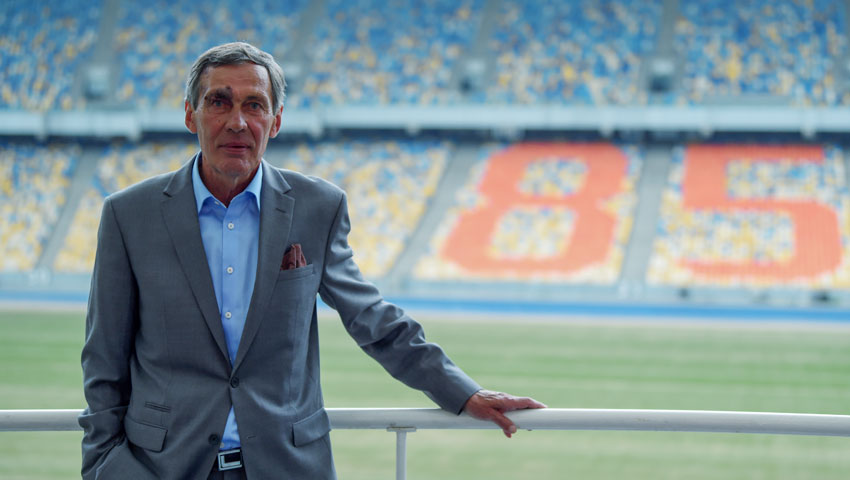
On June 30, legendary player and coach of Shakhtar Valerii Rudakov celebrates his 70th birthday
We congratulate Mr Rudakov on his jubilee and wish him peace and kindness, good health and endless energy, new professional success and great victories! We present an interview with the birthday celebrant.
– Mr Rudakov, you are turning 70, and almost your entire biography is closely connected with football and Shakhtar Donetsk. Please tell us, at what age and under what circumstances did you join Shakhtar? Could you have imagined then that you would spend almost your entire life at the club?
– In the 4th grade, my father took me to the city for a tryout, where the Shakhtar preparatory group was present. I was scouted, and I started practising from that time on. The boys in that group were a year or two older than me. The following year, they conducted recruitment for my age category, and I got into the team. That is how my path to the first team started – gradually, through all the age categories of the Academy. At the age of 16, I already managed to go to training camp with the first team and receive my first salary. I trained, tried, understood what I wanted, and in the end everything worked out thanks to hard work, character and determination – I really wanted it. As for whether I could imagine then that I would spend almost my entire life at the club, then, perhaps, that is exactly what I was moving towards. When I joined the first team, I set the goal of establishing myself in the starting eleven, making as many appearances as possible, playing spectacularly, and winning titles – ultimately, I succeeded.
– You were a representative of one of the strongest and most successful generations in the history of the club: that team won two USSR Cups, the Super Cup, and league medals. What moments related to Shakhtar are the most memorable for you personally?
– The most vivid memory was probably the year 1975, when Shakhtar won the silver medals in the championship. Next year, we played in the UEFA Cup against Juventus, which at that time included almost all the players of the Italy national team. Yes, we lost away, but the atmosphere in the stadium left a lifelong memory. We managed to win at home – it was my first international experience of this kind and a game that was truly memorable. As for the domestic championship, the two USSR Cups were, of course, the most remarkable. Especially the matches where the fate of the winner was decided in one game, regardless of whether you play at home or away. I remember the semi-final, when we defeated Spartak in Moscow, very well – probably no one expected it then. And, of course, the final against Dinamo Tbilisi, which at that time was a very strong team and also played in the UEFA Cup. I specifically remember the 1983 Soviet Cup. We really wanted to win it, because the previous generation had already won this trophy twice, and we wanted to repeat their success. We were able to defeat Metalist In an intense fight. The moments of walking around Luzhniki and our native Donetsk with the trophy in front of our fans are incredibly valuable and unforgettable.
– Who from that generation of Miners do you keep in touch with today? Who have you been able to meet with?
– We keep in touch, but unfortunately, there are not many players left. I talk with Sokolovskyi, Fedorenko, Yashchenko, I am fairly regularly in contact with them. We talk, we recall past moments, because there is a lot to look back on, and we do not forget each other. I recently spoke with Yashchenko – he is currently working at the academy in Mukachevo. I also keep in touch with Kravchenko and Simonov.
– What does Shakhtar mean to you today? Work, family, or something more?
– It is more like something united. Now Shakhtar for me is, above all, an opportunity to pass on my vast experience to the youth. I work at the Academy, I constantly see all age categories, I am able to guide them, to give them advice. You could say that I am a kind of “dressing room coach”, as it is fashionable to say now. I communicate with the players, while watching the recordings I see their weaknesses and try to point them out in individual conversations. It is nice that the young generation respects it and listens. It is important to understand that for an Academy graduate it is very difficult to gain a foothold in the first team of Shakhtar, it requires tremendous efforts. I have specific examples that I am proud of: both when I was a head coach and now, working in the Academy, I have managed to help ensure that individual performers were able to establish themselves in the first team.
– You have been working at the Shakhtar Academy for many years, helping to raise new generations of footballers. What do you think of young players nowadays?
– The current generation is a bit specific. I do not know exactly why, maybe it is a matter of upbringing or attitude towards their work. Maybe modern communications, such as TikTok, distract them from the main goal and tasks that they set for themselves. I always emphasise that the path to the top is extremely difficult. But it becomes easier once you manage to join the first team, although, of course, you still have to continue working on yourself.
– How is this generation of footballers different from the previous ones? What are they stronger at, and what do they lack?
– Each age group is strong in its own way – both as a team and individually. Perhaps at a certain stage there are reasons that do not allow players to fully unlock their potential. It happens that someone is not noticed enough or is rarely involved in the training process of the first team. But, to be honest, I think that young players today somewhat lack the perseverance and true determination, the full dedication to this profession. In order to join the first team, you have to give it your all. Unfortunately, young people nowadays do not always have the perseverance required for this.
– You have raised many famous footballers, regular players of Shakhtar and Ukraine national team. Tell us, can new Rakitskyis, Matviienkos, Sudakovs appear in the near future?
– I really hope for this. We have to raise young players who can make it to the first team, thus proving that the Academy and the coaches are really working towards a single goal. I am sure that one of the Academy graduate will join the first team in the near future. At least there are grounds for this.
– As the Academy coordinator, what achievements would you like to see from the youth teams in the future?
– The Academy sets only the highest goals: we must play in the finals and take first places like we used to. Unfortunately, this does not always work out – this year we did not take first places. However, the format of the current season is such that one game can erase everything we have worked on all year.
– A new season is ahead. How do you see it for the first team of Shakhtar and what are your expectations?
– We have to get back the name we once had, when we became champions and played in the Champions League. That is how I see the upcoming seasons. The new coach, given his attitude, has taken the correct approach, although I think the players are having a hard time right now. I believe that this is what will help Shakhtar achieve the desired results. This is my opinion. Of course, I was not present at the training sessions, but judging by the information in the media, the team is moving in the right direction.
– Mr Rudakov, you are turning 70, and almost your entire biography is closely connected with football and Shakhtar Donetsk. Please tell us, at what age and under what circumstances did you join Shakhtar? Could you have imagined then that you would spend almost your entire life at the club?
– In the 4th grade, my father took me to the city for a tryout, where the Shakhtar preparatory group was present. I was scouted, and I started practising from that time on. The boys in that group were a year or two older than me. The following year, they conducted recruitment for my age category, and I got into the team. That is how my path to the first team started – gradually, through all the age categories of the Academy. At the age of 16, I already managed to go to training camp with the first team and receive my first salary. I trained, tried, understood what I wanted, and in the end everything worked out thanks to hard work, character and determination – I really wanted it. As for whether I could imagine then that I would spend almost my entire life at the club, then, perhaps, that is exactly what I was moving towards. When I joined the first team, I set the goal of establishing myself in the starting eleven, making as many appearances as possible, playing spectacularly, and winning titles – ultimately, I succeeded.
– You were a representative of one of the strongest and most successful generations in the history of the club: that team won two USSR Cups, the Super Cup, and league medals. What moments related to Shakhtar are the most memorable for you personally?
– The most vivid memory was probably the year 1975, when Shakhtar won the silver medals in the championship. Next year, we played in the UEFA Cup against Juventus, which at that time included almost all the players of the Italy national team. Yes, we lost away, but the atmosphere in the stadium left a lifelong memory. We managed to win at home – it was my first international experience of this kind and a game that was truly memorable. As for the domestic championship, the two USSR Cups were, of course, the most remarkable. Especially the matches where the fate of the winner was decided in one game, regardless of whether you play at home or away. I remember the semi-final, when we defeated Spartak in Moscow, very well – probably no one expected it then. And, of course, the final against Dinamo Tbilisi, which at that time was a very strong team and also played in the UEFA Cup. I specifically remember the 1983 Soviet Cup. We really wanted to win it, because the previous generation had already won this trophy twice, and we wanted to repeat their success. We were able to defeat Metalist In an intense fight. The moments of walking around Luzhniki and our native Donetsk with the trophy in front of our fans are incredibly valuable and unforgettable.
– Who from that generation of Miners do you keep in touch with today? Who have you been able to meet with?
– We keep in touch, but unfortunately, there are not many players left. I talk with Sokolovskyi, Fedorenko, Yashchenko, I am fairly regularly in contact with them. We talk, we recall past moments, because there is a lot to look back on, and we do not forget each other. I recently spoke with Yashchenko – he is currently working at the academy in Mukachevo. I also keep in touch with Kravchenko and Simonov.
– What does Shakhtar mean to you today? Work, family, or something more?
– It is more like something united. Now Shakhtar for me is, above all, an opportunity to pass on my vast experience to the youth. I work at the Academy, I constantly see all age categories, I am able to guide them, to give them advice. You could say that I am a kind of “dressing room coach”, as it is fashionable to say now. I communicate with the players, while watching the recordings I see their weaknesses and try to point them out in individual conversations. It is nice that the young generation respects it and listens. It is important to understand that for an Academy graduate it is very difficult to gain a foothold in the first team of Shakhtar, it requires tremendous efforts. I have specific examples that I am proud of: both when I was a head coach and now, working in the Academy, I have managed to help ensure that individual performers were able to establish themselves in the first team.
– You have been working at the Shakhtar Academy for many years, helping to raise new generations of footballers. What do you think of young players nowadays?
– The current generation is a bit specific. I do not know exactly why, maybe it is a matter of upbringing or attitude towards their work. Maybe modern communications, such as TikTok, distract them from the main goal and tasks that they set for themselves. I always emphasise that the path to the top is extremely difficult. But it becomes easier once you manage to join the first team, although, of course, you still have to continue working on yourself.
– How is this generation of footballers different from the previous ones? What are they stronger at, and what do they lack?
– Each age group is strong in its own way – both as a team and individually. Perhaps at a certain stage there are reasons that do not allow players to fully unlock their potential. It happens that someone is not noticed enough or is rarely involved in the training process of the first team. But, to be honest, I think that young players today somewhat lack the perseverance and true determination, the full dedication to this profession. In order to join the first team, you have to give it your all. Unfortunately, young people nowadays do not always have the perseverance required for this.
– You have raised many famous footballers, regular players of Shakhtar and Ukraine national team. Tell us, can new Rakitskyis, Matviienkos, Sudakovs appear in the near future?
– I really hope for this. We have to raise young players who can make it to the first team, thus proving that the Academy and the coaches are really working towards a single goal. I am sure that one of the Academy graduate will join the first team in the near future. At least there are grounds for this.
– As the Academy coordinator, what achievements would you like to see from the youth teams in the future?
– The Academy sets only the highest goals: we must play in the finals and take first places like we used to. Unfortunately, this does not always work out – this year we did not take first places. However, the format of the current season is such that one game can erase everything we have worked on all year.
– A new season is ahead. How do you see it for the first team of Shakhtar and what are your expectations?
– We have to get back the name we once had, when we became champions and played in the Champions League. That is how I see the upcoming seasons. The new coach, given his attitude, has taken the correct approach, although I think the players are having a hard time right now. I believe that this is what will help Shakhtar achieve the desired results. This is my opinion. Of course, I was not present at the training sessions, but judging by the information in the media, the team is moving in the right direction.


Start Slideshow